
Table of Contents
What’s a Rain Garden?
A rain garden is a shallow depression in the landscape that collects rainwater runoff from roofs, driveways, patios, and other hard surfaces. It is planted with native vegetation that is tolerant of occasional flooding. Rain gardens help to reduce stormwater runoff, filter pollutants out of the water, and provide habitat for wildlife.
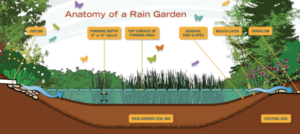
Typically located in a low-lying area at least 10 feet away from the foundations of any buildings, the 4-8inch deep rain garden forms what I like to refer to as a ‘root poot’. It allows the accumulation or pooling of run-off water around the root zone of your plants.
Make It Effective
For effectiveness, the area should be so shaped as to allow the water to flow through slowly – giving both the roots and the soil time to absorb as much water as possible. You will also need to ensure you don’t create a dam – excess water needs a safe overflow or outflow point.
Rain gardens are planted with a variety of native plants, including grasses, perennials, and shrubs. Native plants are well-adapted to the local climate and are more likely to survive in the wet and dry conditions of a rain garden. Some good rain garden plants include:
- Grasses: blue grama, little bluestem, switchgrass
- Perennials: black-eyed Susan, cardinal flower, ironweed, Joe Pye weed, milkweed
- Shrubs: buttonbush, dogwood, spicebush, winterberry
Choose alternatives that are suitable for your environment. Even better, make it part of your self-suffiiciency plan by choosing edible plants for each zone.
They can also be a low-maintenance way to manage stormwater runoff and improve the health of your landscape. Once the plants are established, the rain garden will take care of itself.
Rain Garden: The Benefits
Here are some of the benefits of rain gardens:
- Reduce stormwater runoff: Rain gardens help to reduce stormwater runoff by absorbing rainwater into the ground. This can help recharge groundwater and reduce flooding and erosion downstream.
- Filter pollutants out of water: Rain garden plants help to trap and/or filter pollutants out of rainwater runoff, such as fertilizers, pesticides, and oils. This helps to improve the quality of storm or rain run-off flowing in our lakes, rivers, and streams.
- Provide habitat for wildlife: Rain gardens provide habitat for a variety of wildlife, including birds, butterflies, and frogs. This helps to support biodiversity and create a more healthy ecosystem.
If you are interested in creating a rain garden, there are many resources available to help you get started. You can find information on rain garden design, plant selection, and construction on the websites of government agencies, environmental nonprofits, and landscaping companies. I will touch on some of this information here, to get you started.
Rain Garden Design Tips
Here are some tips for planting and caring for a rain garden:
- Choose a sunny spot with well-drained soil. Rain gardens need at least 6 hours of sunlight per day to support plant growth.
- Choose a low-lying area.
- Rain gardens should be located in a low-lying area where water will naturally collect.
- If your property does not naturally have such an area, feel free to create your own. With a little study of how water flows throughout your property—or by-passes it—and some creativity, you can create your very own perfect area.
- Amend the soil with compost or other organic matter to improve its ability to hold moisture, drain excess so it doesn’t become boggy, and increase its fertility. If your soil is clay-like, you can amend it by adding compost or sand and layer up with lots of organic matter to function like a sponge.
4. Plant the plants in clumps, with spacing that is appropriate for their size at maturity. Planting in clumps will
-
- help to create a more natural look and will
- help to hold the soil in place.
5. Water the plants regularly, especially during the first year after planting to help them establish a stron, healthy root system.
6. Mulch around the plants to suppress weeds and retain moisture in the soil.
7. Boost soil nutrition by periodically
-
- topping off with a good compost as per the types of plants you have
- pop in nitrogen-fixing plants here and there as needed, and
- Consider the ‘chop n’ drop’ method where leaves and stems are dropped and left to rot where they drop.
Rain Garden Tropical & Subtropical Plant Selection
Many websites often omit suggestions for warmer climates, so here is a list of tropical and subtropical plants that are both tolerant of the wet and dry conditions of a rain garden, and that are also edible, to help you meet your self-sufficiency goal:
- Fruit trees:
- Banana (Musa spp.), Mango (Mangifera indica), Papaya (Carica papaya), Avocado (Persea americana), Citrus (Citrus spp.)
- Vegetables:
- Sweet potato (Ipomoea batatas), Taro (Colocasia esculenta), Cassava (Manihot esculenta), Yams (Dioscorea spp.), Peppers (Capsicum spp.)
- Herbs:
- Lemongrass (Cymbopogon citratus), Ginger (Zingiber officinale), Turmeric (Curcuma longa), Galangal (Alpinia galanga), Kaffir lime leaves (Citrus hystrix)
- Other Edibles:
- Moringa (Moringa oleifera), Pigeon pea (Cajanus cajan), Winged bean (Psophocarpus tetragonolobus), Chayote (Sechium edule), Chaya (Cnidoscolus aconitifolius)
These plants are all native to tropical and subtropical regions, so they are well-adapted to wet and dry conditions. They are also all edible, so they can be used to provide food for your household. Additionally, these plants can provide other benefits, such as shade, wind protection, and habitat for wildlife.
When designing your rain garden, be sure to choose plants that are compatible with each other and that will thrive in the specific conditions of your site. Consider the amount of sunlight, water, and soil drainage that each plant needs. You may also want to consider the size of the plants at maturity, so that you can create a balanced and visually appealing design.
With proper care, your rain garden will thrive and provide you with food, beauty, and environmental benefits for many years to come.
Additional Rain Garden Beginners Tips
Here are some additional tips for rain garden beginners:
- Start small. You don’t need to create a large rain garden to reap the benefits. Even a small rain garden can make a difference.
- Don’t be afraid to experiment. There are many different ways to design a rain garden. Choose a design that works for your space and your budget.
- Be patient. It takes time for a rain garden to mature—give it at least a year to get established. Don’t be discouraged if you don’t see results immediately.
Rain gardens are a great way to improve your landscape and help the environment. With a little planning and effort, even a gardening beginner can create a beautiful and functional rain garden—a tick one more self-sufficiency box by planting edible perrenials.
Additional Resources
If this is your area of focus right now, here are some additional places to look for great information to level up your knowledge.
- Surface Water Management: From creating a site map, the terms you might need to now, dispersion techniques especially for storm and flooding zones and so much more.
2. Creating the Right Soil for It
3. Step-by-Step Construction with Pictures
4. Rain Garden Handbook: A very detailed handbook which can easily be adapted to meet your specific requirements.
Enjoy!

0 Comments